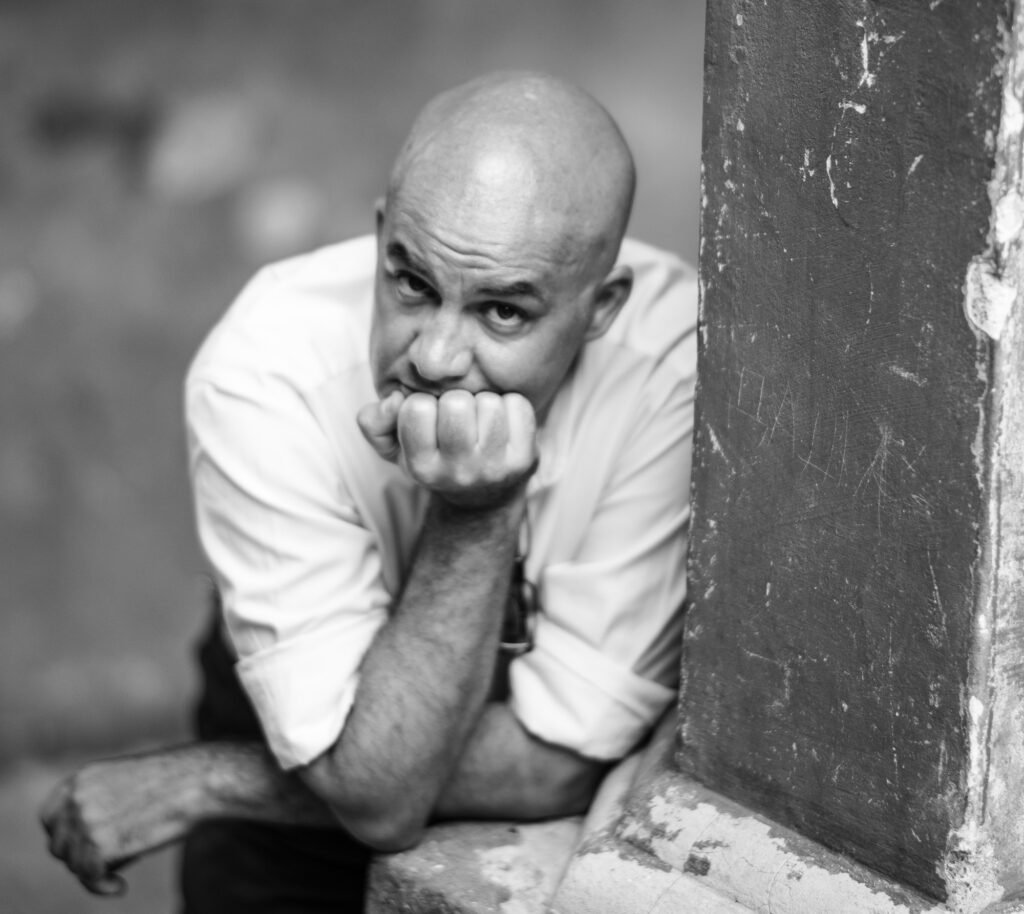
Architect, author, teacher and artist, Harvard GSD alumnus Paolo Conrad-Bercah on the Harvard, the courage to be a free thinker, the building that came closest to his vision, and why his latest exhibition is asking AI uncomfortable questions.
Architect, author, teacher and artist Paolo Conrad-Bercah has built a career that crosses boundaries between disciplines and countries with as much freedom as his thinking.
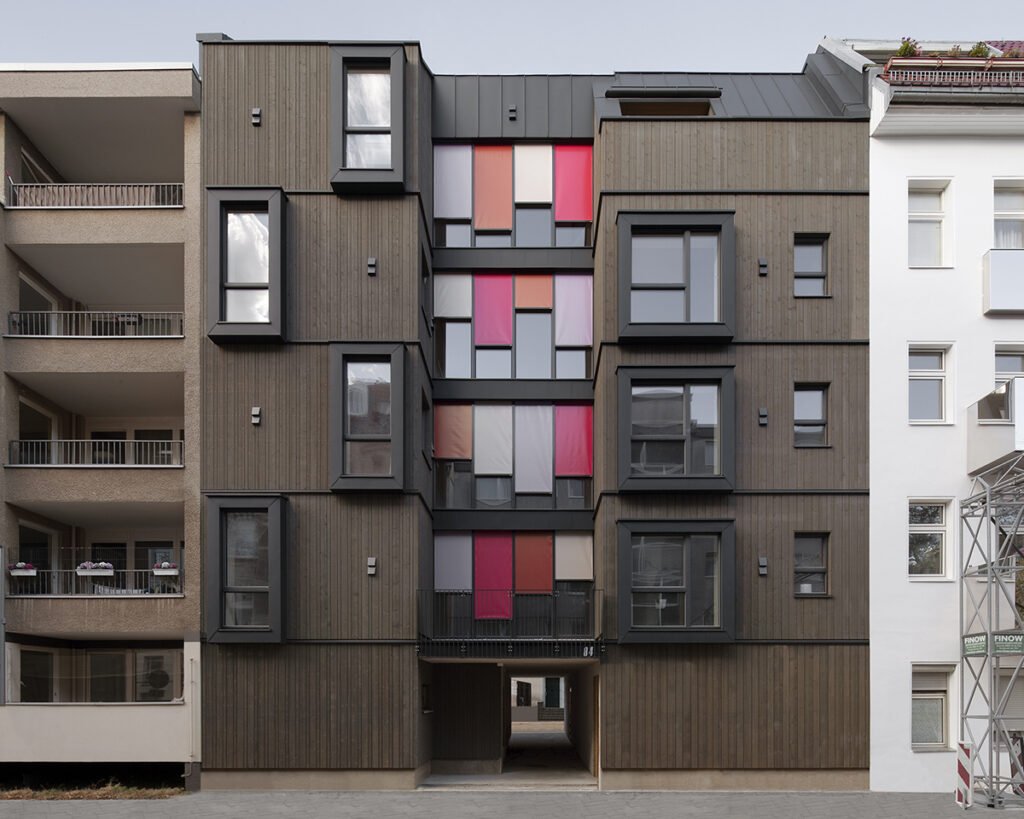
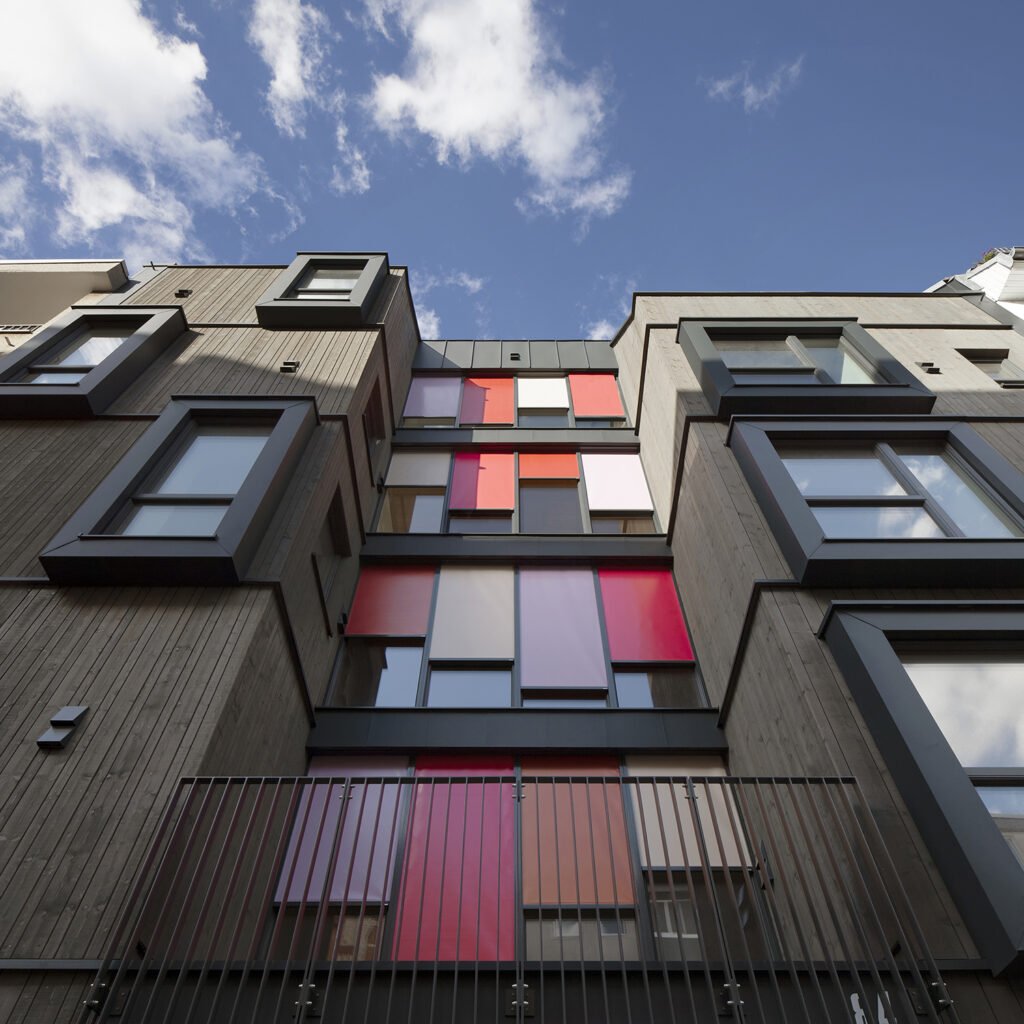
After studying at the Politecnico di Torino and the Harvard Graduate School of Design, he worked with Aldo Rossi and Ignazio Gardella in Milan and with I. M. Pei’s practice in New York, before establishing his own studio, c-b a. He has taught at Harvard, lectured at MIT, and currently teaches at the Politecnico di Milano and the University of Genoa. His architecture includes Berlin’s Bercahaus, the city’s first five-storey highly prefabricated timber building, whose timber structure was assembled on site in just 21 days.
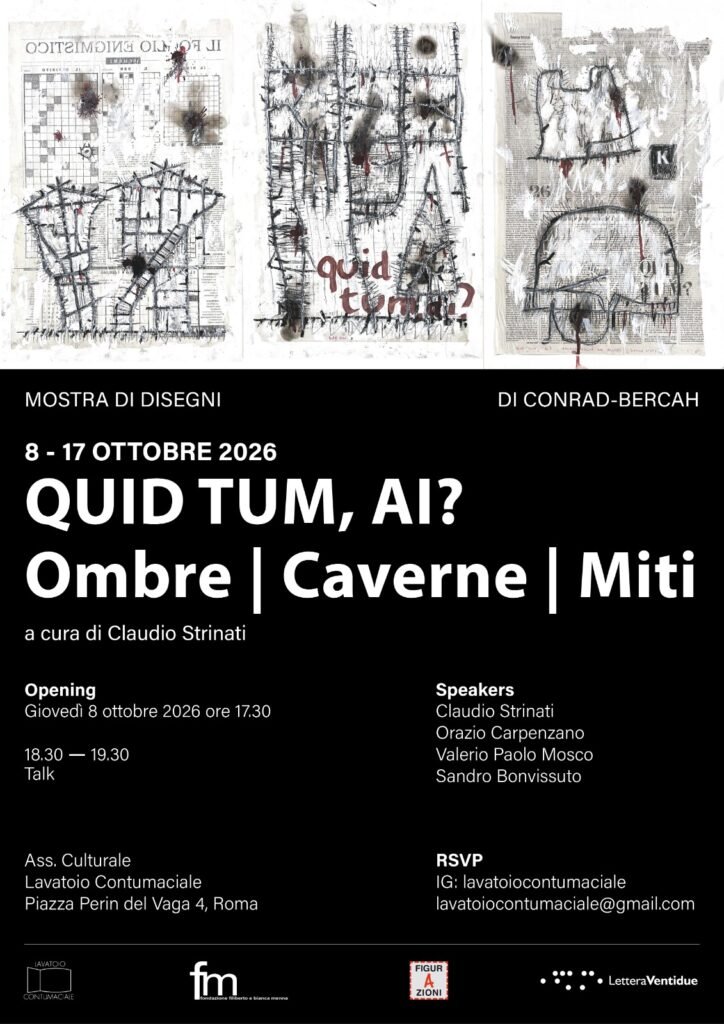
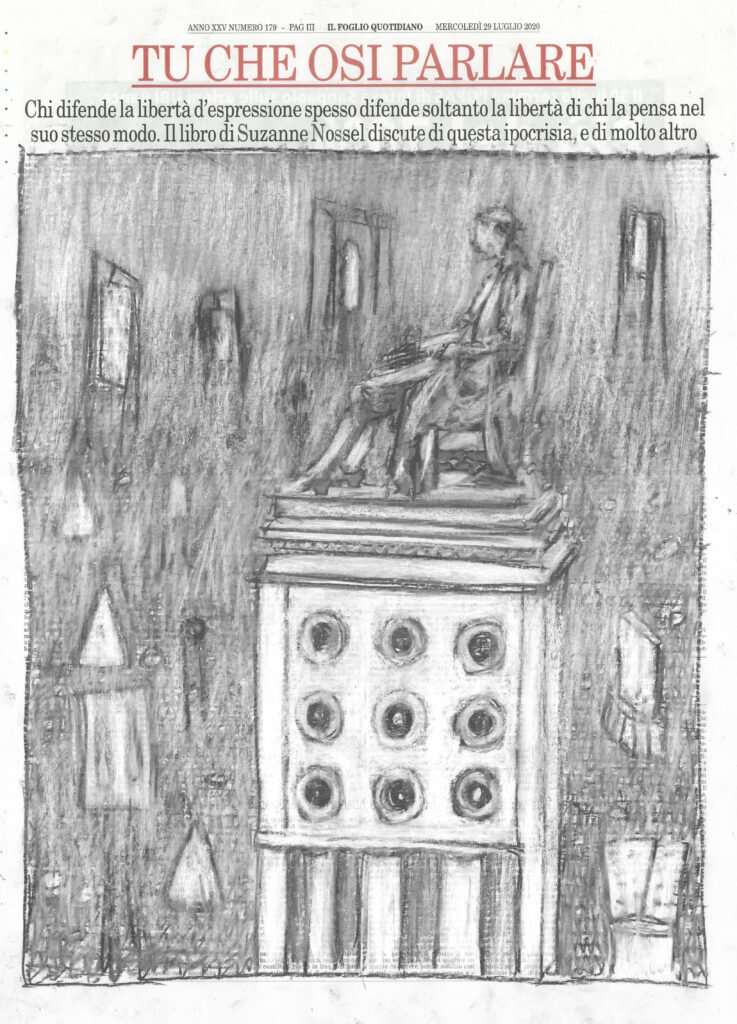
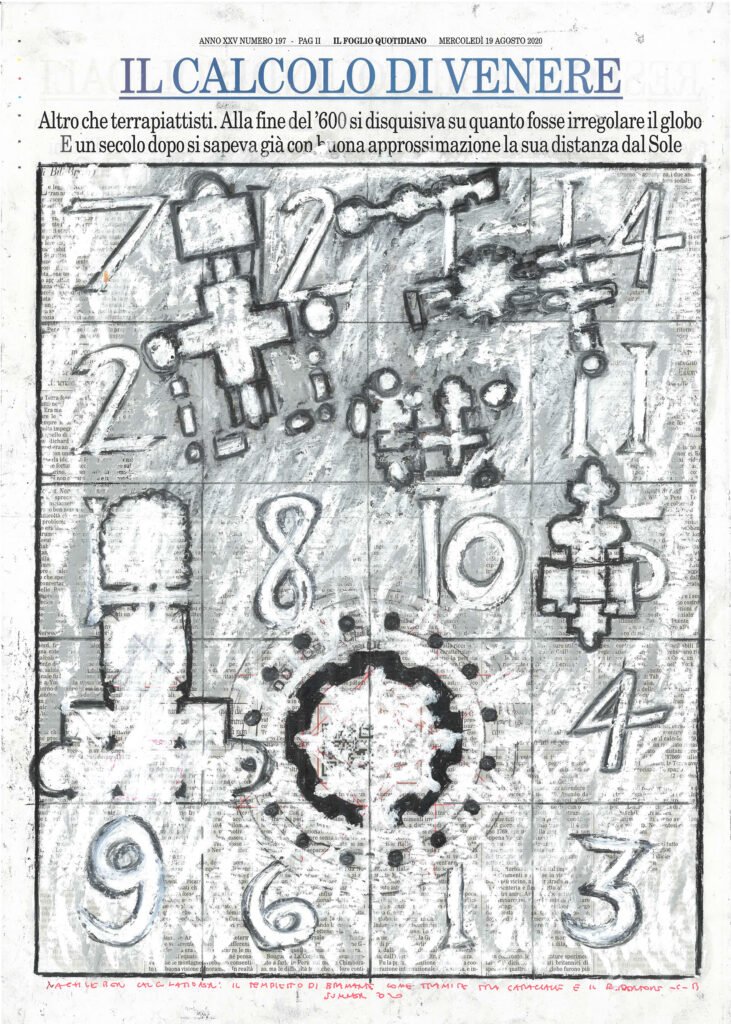
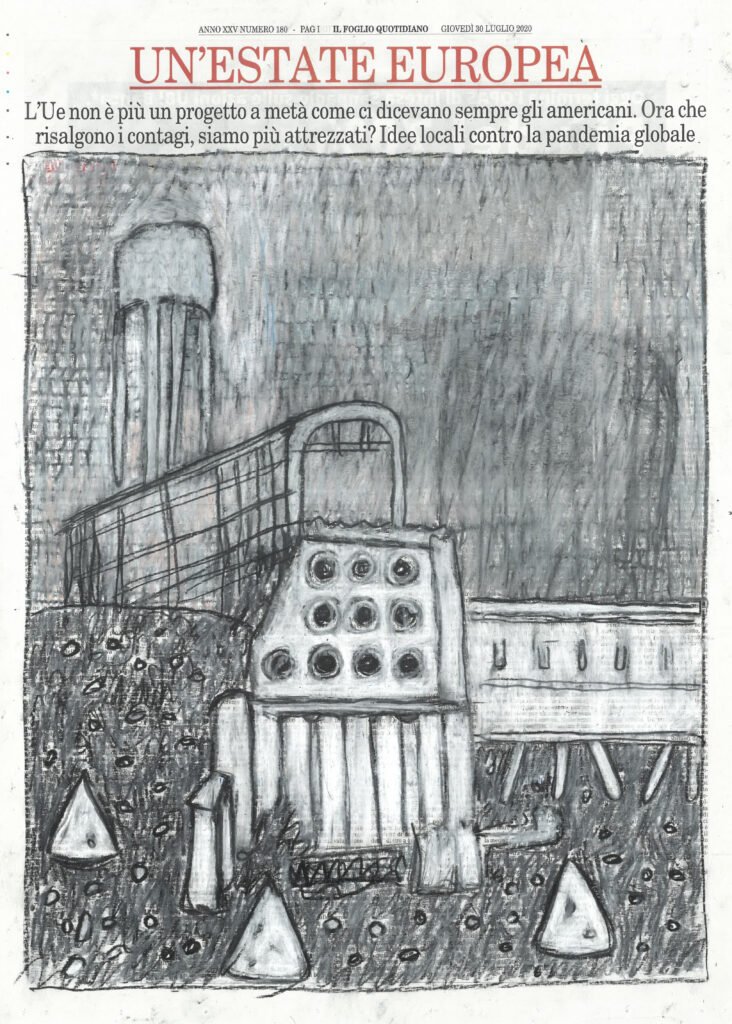
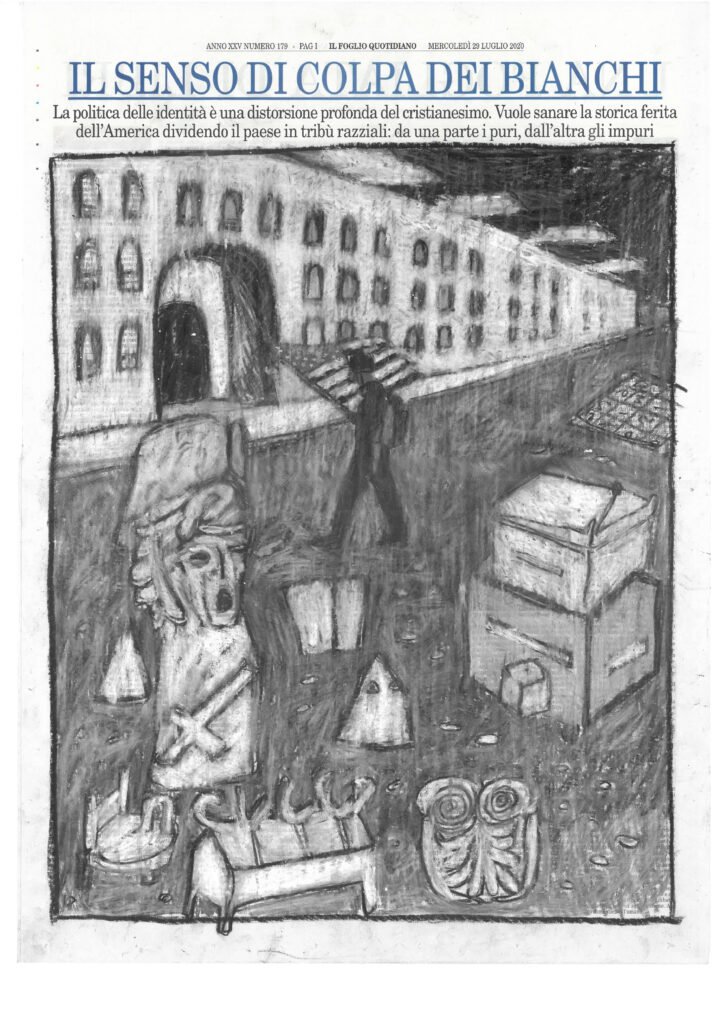
His interests extend well beyond architecture. His books and drawings explore many of the same preoccupations that run through his buildings: cities, aesthetics, memory and the passage of time. This October, another strand of that multidisciplinary practice comes to the fore in Rome with Quid Tum, AI? Ombre | Caverne | Miti, an exhibition bringing together 36 works produced in 2026.
Conversing with Paolo is a multilayered experience and a delight for the intellect. He is full of references to architecture, art, literature, philosophy, history and film, with one idea frequently leading him into another. Although he describes himself as an architect, author and intellectual, I would be tempted to add philosopher to the list.
For the first in our Meet the Members series, we will revist an earlier point in Paolo’s story: Harvard, and an experience that would change not only the course of his career, but his sense of what might be possible.
THE POWER OF THREE
IF YOU HAD TO DESCRIBE YOURSELF IN THREE WORDS, WHAT WOULD THEY BE?
Architect, author and intellectual.
WHAT THREE THINGS COULD YOU NOT LIVE WITHOUT?
Movies, art exhibitions and books.
WHAT ARE YOUR THREE FAVOURITE WORKS OF ARCHITECTURE?
The Pantheon in Rome, the Alhambra in Granada and the Mosque-Cathedral of Córdoba.
IF YOU COULD INVITE ANY THREE PEOPLE, LIVING OR DEAD, TO YOUR DREAM DINNER PARTY, WHO WOULD THEY BE AND WHY?
David Foster Wallace, Buñuel and Fellini.
From Turin To Harvard
You studied first at the Politecnico di Torino and then went to Harvard. What made you want to leave Italy and go to the United States?
I studied in Torino, then I started working in Milano for Aldo Rossi and Ignazio Gardella. And this was exactly at the time when the Mani Pulite scandal occurred, which sort of brought building activity pretty much to a halt.
At the time I was thinking, maybe this is a good time to keep learning? I was also very young, and I wanted to keep studying, in a way.
So I applied to Harvard and to the school in Venice. Harvard accepted me, the school in Venice didn’t, so I went to Harvard.
Do you remember the architect you were when you arrived at Harvard GSD? How was the Paolo who left different, as an architect or as a person, or both?
There were a lot of Spanish guys at the time, in the mid-’90s. There was Rafael Moneo, Enric Miralles, South American architects, Swiss architects, Jacques Herzog and Pierre de Meuron.
The interesting thing about Harvard is that it’s very international. They normally invite the most interesting people around to teach, even for just a semester or for a couple of years. For me, it was a crucial experience, also in getting used to a completely different environment, way of living and culture.
And I was very much attracted by the scale. The sheer scale of American architecture is completely different from the European one.
So I produced something there that was quite unprecedented. Instead of doing a project for the thesis, I produced a book, which is like a comparison between European and American ways of understanding architecture using three case studies.
A lot of people got excited about it. Number one, it was the first one of its kind, I guess, and two, because the argument was compelling and produced a very strange level of excitement.
They managed to get the book to I. M. Pei’s partner, Henry N. Cobb, who at the time was actually looking for somebody to produce a monograph on him. So once I finished, after the discussion of my thesis, I was hired by him to do exactly that.
It was also a very unusual situation, because for two years I met with this guy, who had 50 years of professional experience at one of the most prestigious firms in the States, on Saturday mornings to discuss his life and work.
And those conversations sound like another book?
Yes. It came out 20 years later. Henry Cobb. I think the first Cobb to go to Harvard was in 1799. So he’s Boston, Harvard, bred and buttered.
On the one hand, he was sort of convinced by others to publish this book, but on the other hand was completely uncomfortable about having a book written about himself. So we had very unusual and strange conditions to work with.
We were two years at it, and then it took 20 years to get published. But yes, it got published. Henry N. Cobb: Words & Works 1948–2018: Scenes from a Life in Architecture.
WHAT HARVARD GAVE HIM
WHAT DID HARVARD GIVE YOU THAT YOU DON’T THINK YOU COULD HAVE LEARNED ANWHERE ELSE?
The sense that anything is possible, provided you go for it.
I was sort of shy growing up, and I never had the impression that what I was doing was worthy of anything. Whereas there, I got the impression it was.
WAS THERE A PROFESSOR, CRITIC OR FELLOW STUDENT AT HARVARD WHO FUNDAMENTALLY CHANGED THE WAY YOU THOUGHT ABOUT ARCHITECTURE?
The guy who was a mentor to me was my thesis advisor, a Canadian architect called George Baird. I went to him and I proposed this thing that had no precedent, and he just went with it. And he hooked me up with the most important critics present at the time.
So I had the time of my life doing it.
Also, you have to remember that this was done in English. So this was somewhat reckless, to produce a document of this sophistication, not in my native language. For me, it was like a gigantic, enormous intellectual effort that I somehow managed to perform.
I find it hard to believe I had the energy to do it, but I did. I think it’s also because of him.
HARVARD THEN AND NOW
IS THERE ANYTHING ABOUT ARCHITECTURAL EDUCATION AT HARVARD IN THE 1990s THAT YOU THIK TODAY’S STUDENTS HAVE LOST ?
The difference between my time at GSD and today is that today students don’t have time to work. Meaning that there is so much coursework. But this also happens at the Politecnico, where I teach. You tell them to go see something two kilometres away, and then the next week you come back and they say they didn’t go because they don’t have time.
But the reality is that the program has changed. Today, every hour you’ve got some class, lecture, seminar, whatever, that doesn’t give you free time to think, or to do your own thing, or to go see something, which for our profession is extremely crucial.
And this is quite a shame, I think. But it’s this logic of credits. And it’s like some sort of horror vacui rhetoric that has completely eliminated any notion of otium.
But otium is, for me, the most important time of your life because apparently you don’t do anything, but you’re concentrating on something that is of interest to you.
If you don’t have that, then you’re losing something that is very important, some reflective time.
THERE WOULD BE NO PHILOSOPHY WITHOUT SOME FREE TIME?
Yes, exactly.
From Student to Teacher
What advice do you give to aspiring architects or to your students?
I always tell my students that they have to learn to prioritise: you make a list, see what is important and do the important stuff. And the rest of the stuff, do it in a much quicker way. But they seem to have a hard time doing that.
It’s such an important aspect of our job. You have to make the main decision first and then the second decision afterwards.
From An Idea to a Building
What is the most rewarding part of being an architect?
The most rewarding part is to get something done, to get something done in the way that is close enough to what you envisioned. Because it’s impossible to get it exactly how you wanted it normally because you have to work between the cracks of power.
The power is not in the hands of the architect. It’s in the hands of everybody else, mostly the client or the city or the construction workers. So you have to find a way to move in the spaces between these conflicting powers so that the project gets in a way that is somewhat close to what you had in mind.
And what is the most challenging part?
It’s the same thing!
Bercahaus
Of the works you’ve completed, is there one that you feel came closest to your original vision?
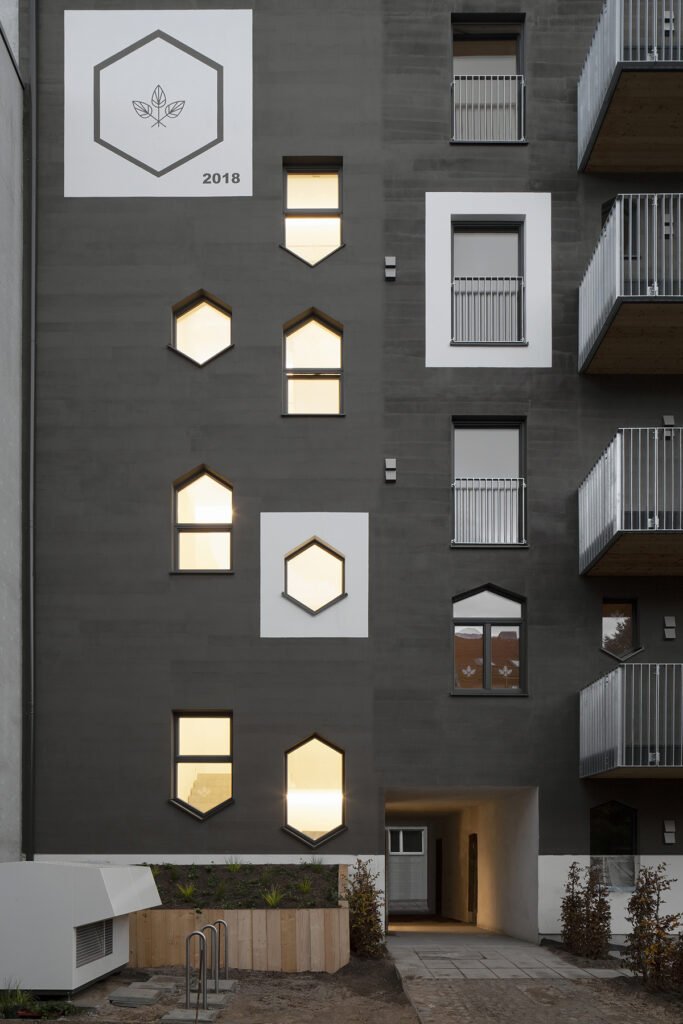
Yes, I would say Bercahaus in Berlin. I’m happy with it. There are a couple of things that I would have changed, but this is the case with any architect.
But yes, overall, I’m happy with it. And it got, I think, good reviews and was fairly well received.
Quid Tum, AI?
Quid Tum, AI? is the title of your next show in Rome in October. It is a rather mysterious title. What is it about?
It is a show in which I have collected 36 works I produced in 2026 which, taken as a whole, pose a direct question to so-called artificial intelligence: Quid Tum, AI? Which could be translated as: “So now, what do we do?”
It is a reference to Leon Battista Alberti’s famous winged eye.
The question seems particularly pressing today, in a global scenario where the digital revolution is eliminating, at supersonic speed, any notion of debate or free discussion. Before the option of free will, a person’s ability to autonomously decide their own thoughts and actions, is erased by the hyperscalers of Silicon Valley, I felt a spontaneous urge, after being struck by a Proustian short circuit, to reread Plato’s Allegory of the Cave.
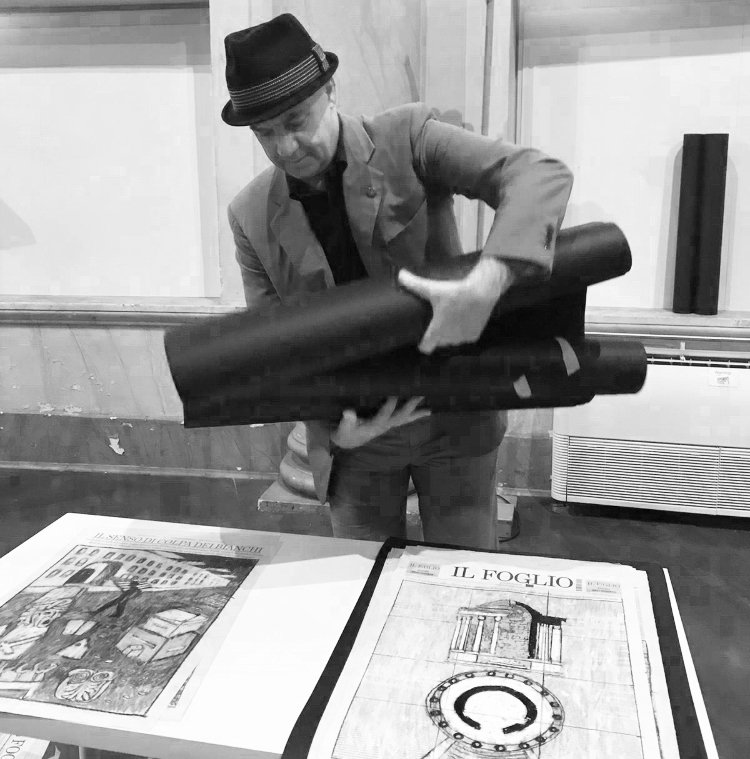
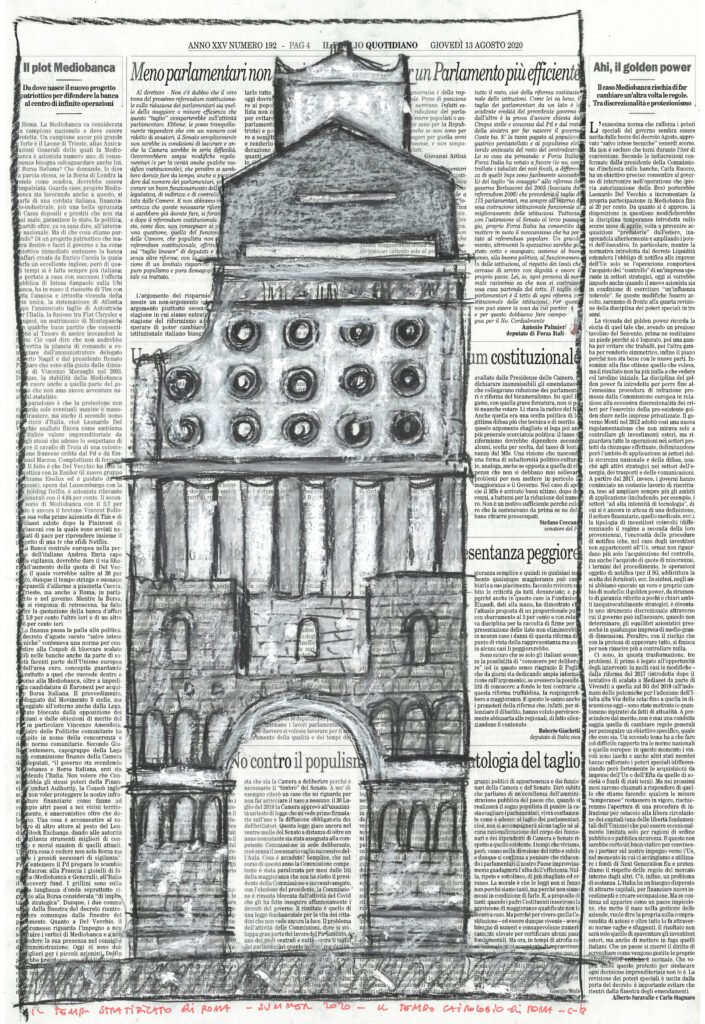
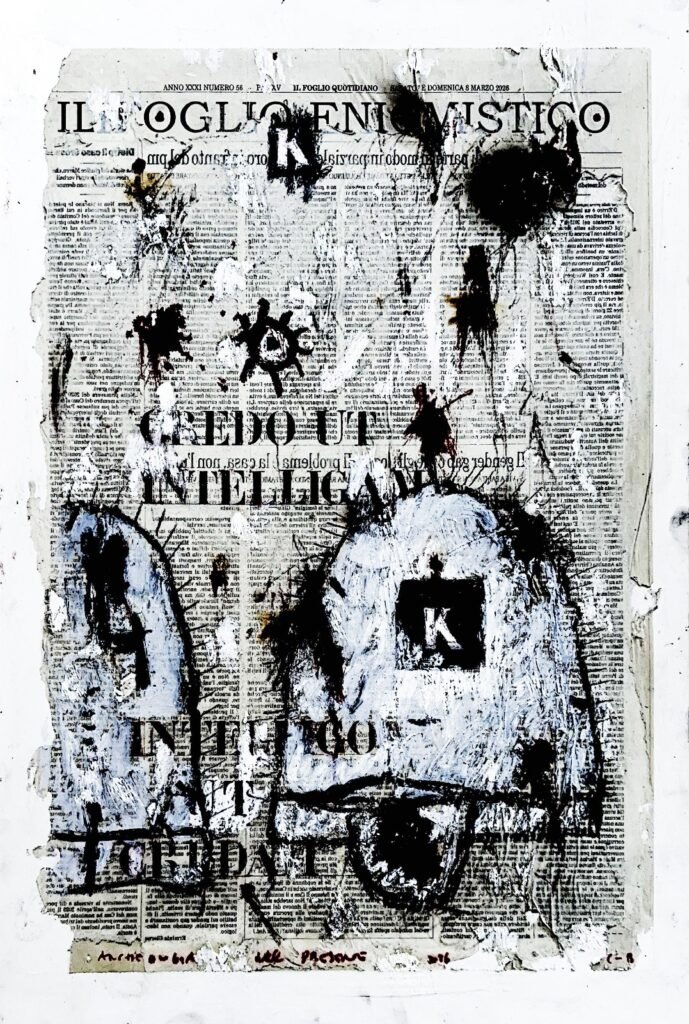
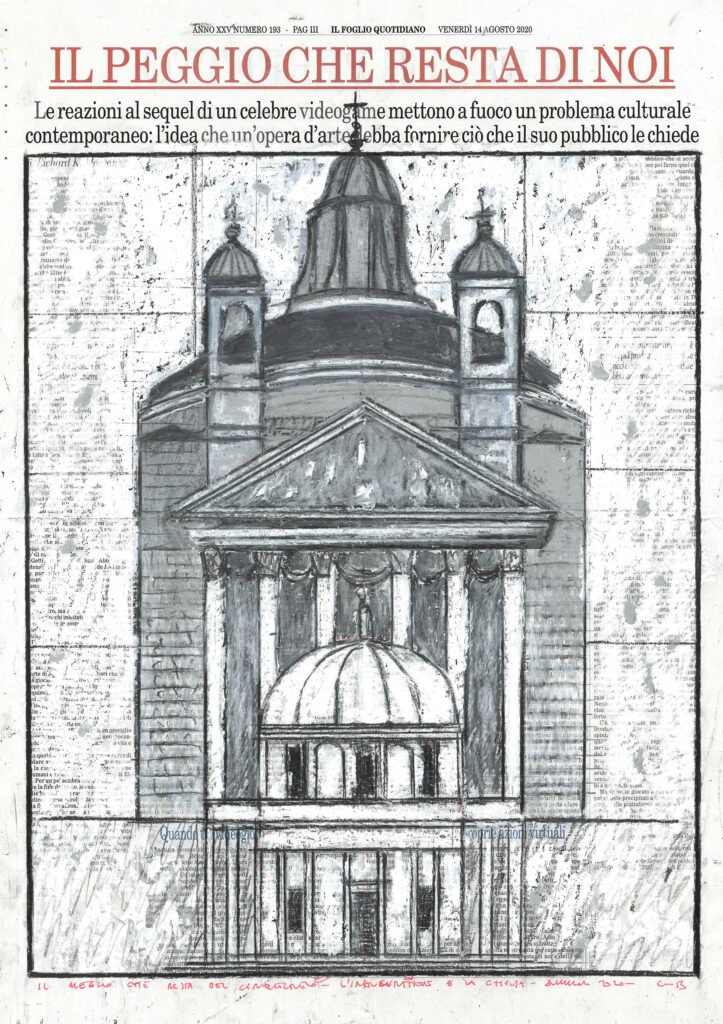
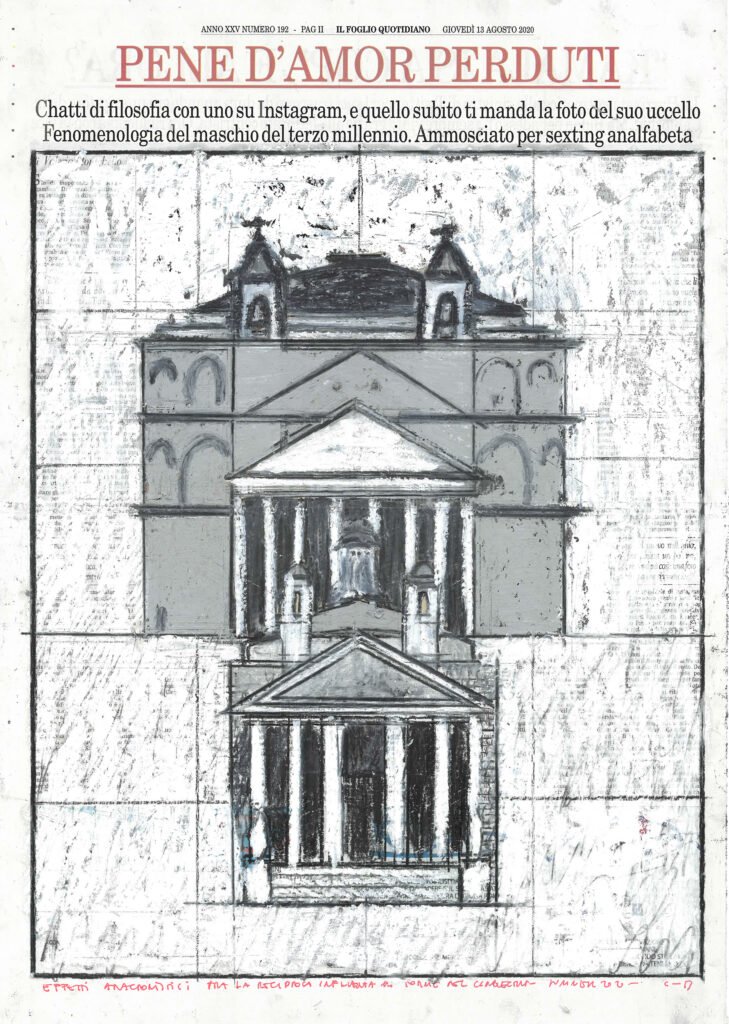
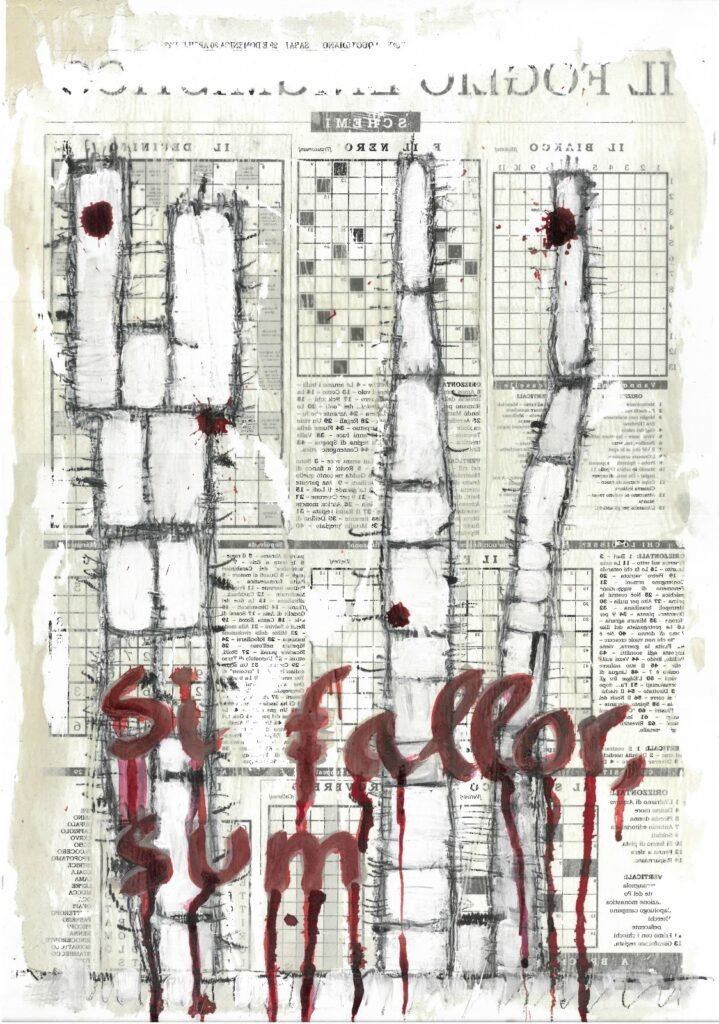
I started grafting “primitive” graphic symbols onto the pages of Il Foglio Quotidiano AI, the world’s first newspaper written by artificial intelligence, an experiment that has captured attention around the world.
It is a series of works somewhat different from the drawings I have produced for previous shows, as I have experimented with a mix of techniques, including collage.
And where did that bring you?
The experiment planted a doubt in my mind: whether we like it or not, the planet’s inhabitants find themselves reliving an extraordinary Nachleben of the myth of the cave, a posthumous reimagining of a myth that many would prefer to leave behind.
In other words, the 36 works seem to suggest that the population today dwells in a space similar to Plato’s cave. It is a condition for which the population itself appears genetically unprepared: being “enslaved” by applications engineered to generate addiction to a single activity, observing on the wall the shadows cast by the new figurines and objects that diligent, read: overly zealous, attendants, or artificial intelligence applications, carry behind the low wall to which we are chained without even realising it.
Many seem to believe that those shadows are the only reality that exists. In several cases, they even believe they are the only shadows that have ever existed.
Hence the need for the exhibition as a sort of “special edition” of Il Foglio, featuring a different AI. As a way of posing the issue. Or the uncomfortable question.
To read more about Paolo Conrad-Bercah read our in-depth ArtAddict interview here where he explains why he always visits a cemetery when he travels, the difference between a traveler and a tourist, his experiences from Rome to Berlin, the projects he wishes he had built and his belief that architecture ultimately succeeds or fails through its ability to transmit pathos.
Paolo Conrad-Bercah
Website:
https://www.c-ba.it/
LinkedIn:
https://www.linkedin.com/in/paolo-conrad-bercah-570bbb9/
Instagram:
https://www.instagram.com/paolo_conrad_bercah/
YouTube | Conrad-Bercah Architects:
https://www.youtube.com/@conrad-bercaharchitects475/videos
All images courtesy of Paolo Conrad-Bercah